
Interconnecting Game Loops Pt. 1
Building Your Perfect Solo TTRPG Session

I’m always looking to answer the question during solo play or setting up a new game: what do I really actually enjoy?
So many times a solo campaign is derailed when for some reason I think I have to do something I don’t want to, or get stuck in a section that bores me and for whatever reason I don’t simply “skip it,” because this feels “wrong” somehow.
But this is the thing: I am not playing solo to break the rules, or to do “whatever I want.” I’m looking for a play experience and structure that is enjoyable on its own, and that actually makes me want to sit down and play another session, wondering “what will happen this time?” Generally, this is what’s called a “play loop,” and I think having multiple “play loops” is what makes a really enjoyable solo experience for me.
For example: one might have a defined loop for hexcrawling - a procedure that is followed each time but nets different results due to things like getting lost, random encounters, weather and obstacles, resource management and so on.
One might have another defined loop for how settlements and cities work.
Another for a “heist” loop, or a dungeoncrawl.
These interconnected “loops” make the entire game a sort of grandfather clock of interconnected pieces and cogs that each may be quite different and fulfill a totally different function, but that all together form a satisfying and smoothly operating machine. In this case, the machine is the solo game experience in total.
Answering the question, “what do I really enjoy” before putting together a game is an important one, because the answers will define what loops we need to have in place, or at least have in place eventually in order to have fun.
For my part:
I like sandboxes, I like factions, I like interconnected people and places, and I like the feel that the world is alive, reacting to my PC and acting on its own as well. I also like hexcrawling and exploration via tables, building specialized encounter tables to make my little world feel more coherent, and satisfying combat. Beyond this I like the idea of the “zero to hero” build up, going from the humble dungeoncrawler or local peasant hero to potentially taking over that cool ruined fort, maybe hiring on some mercenaries and eventually becoming a force to be reckoned with in the region.
In this piece, and in the next few connected ones, I’ll show you what I’m working on when it comes to building out these loops. Maybe you’ll find something useful for your own game!
Also, I am not presenting these as earth shattering or “new.” Plenty of people have used these concepts in their games. I am merely trying to artifice them together in a way that creates a deep and satisfying solo game for me.
So often, I am building and designing things for others. Sometimes its nice to put stuff together just for your own pleasure and enjoyment, because it is precisely this that recharges my batteries and keeps my sense of wonder and joy alive.
I hope you enjoy!
For starters, I decided to limit myself to a central hex with small settlement, surrounded by 6 hexes that will make up the starting area, factions, and so on.
(For more on this, check out my as yet unfinished 7 Hex Codex series - I promise I’ll finish it and get a little setting creation zine out soon!)
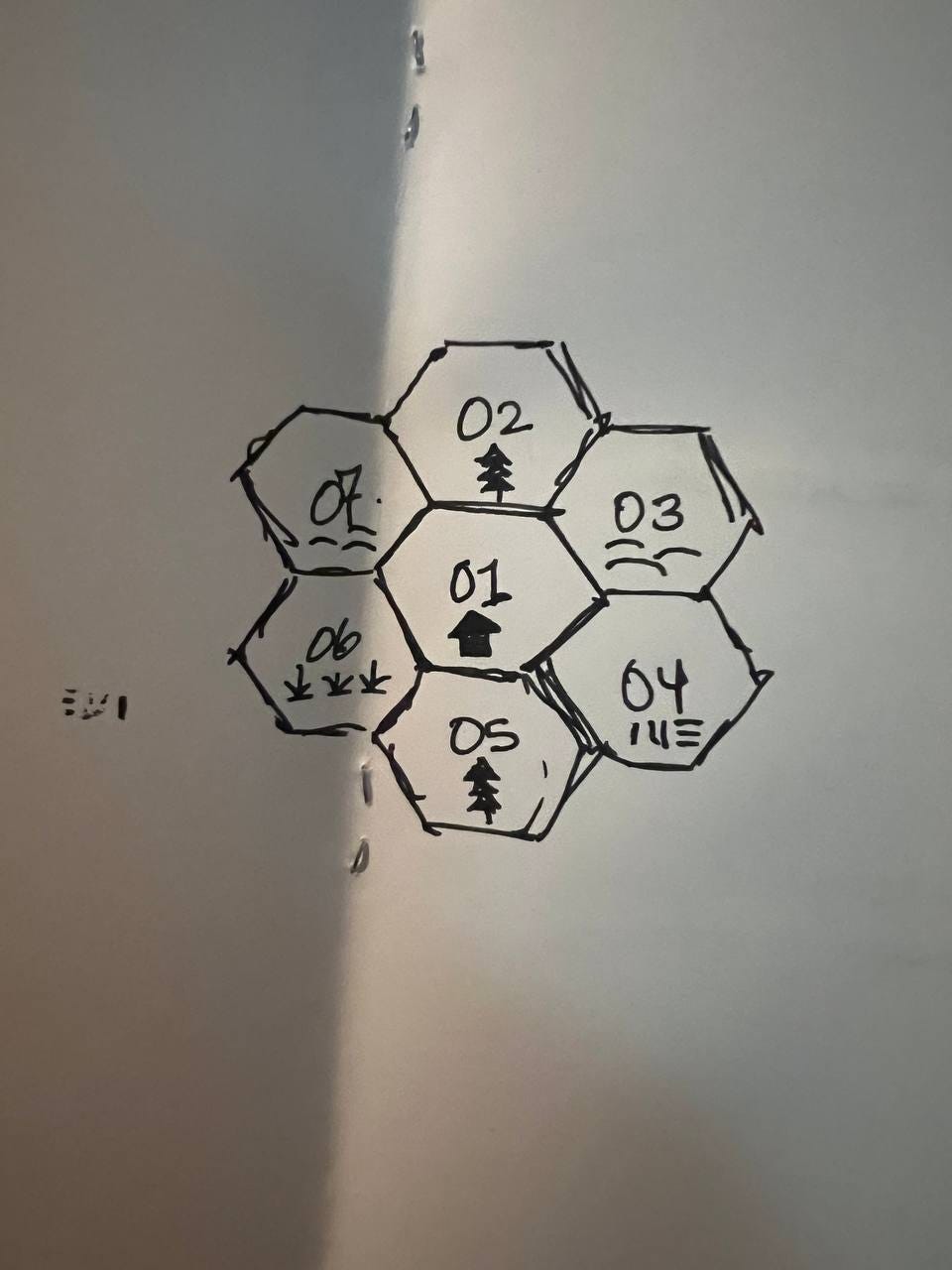
For my current purposes, this is the village of Thorn, a walled village of some 200 souls. Using my own favored methods (there’s so many resources for building out hexes - I like my own Tarvannion, and the classic Sandbox Generator), I create the six surrounding hexes. Each of these has its own location or faction - two words that are going to get a lot of play in this method.
The rules are simple and loose: if its more than a single person in confederation, and they have goals, no matter how straightforward, its a faction for our purposes.
If it is anything interesting at all, even if its a really big tree or something basic like that, its a location.
I recommend starting with anywhere between 3-5 factions at the beginning of your game. This will give you a little variety, and create a potential for a hotbed of action early on that your PC or party can interact with.
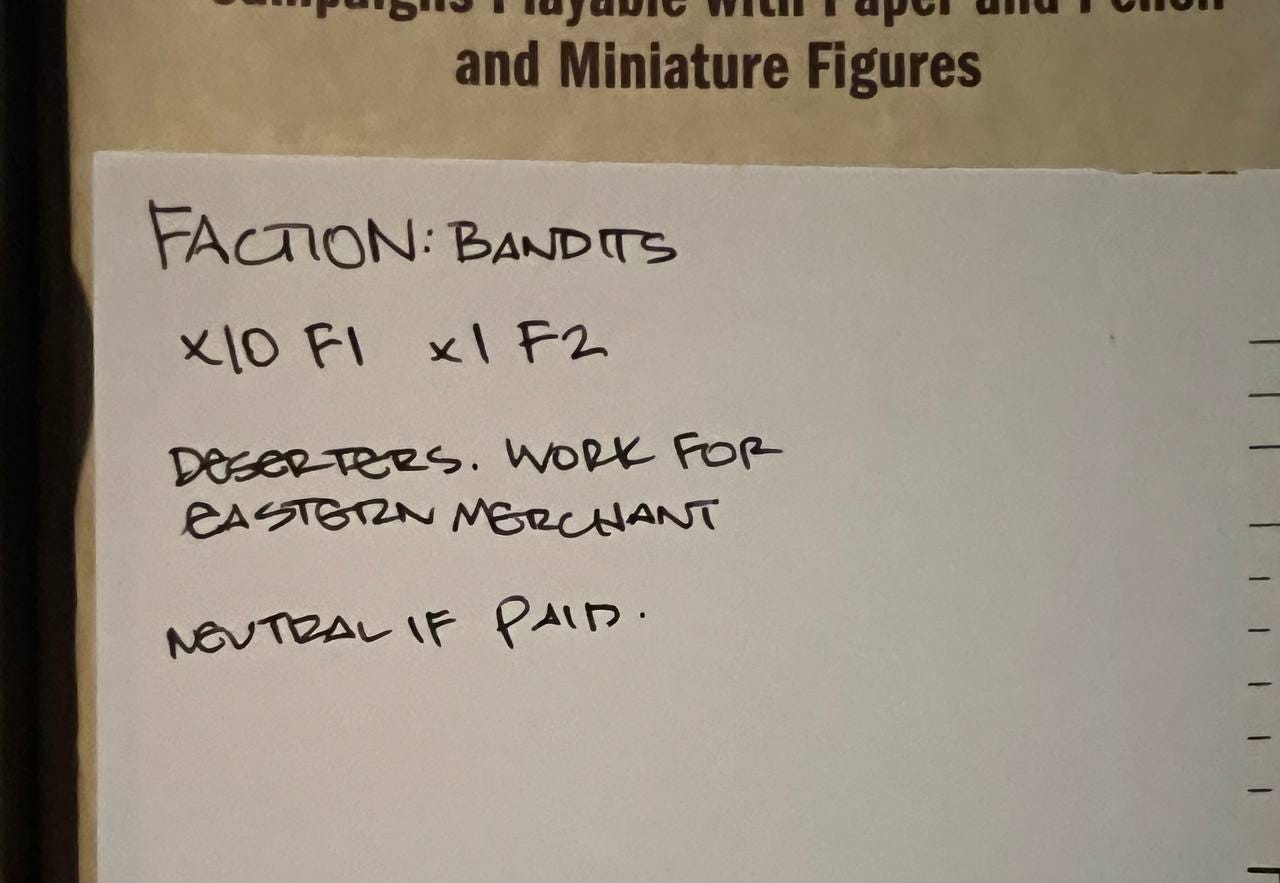
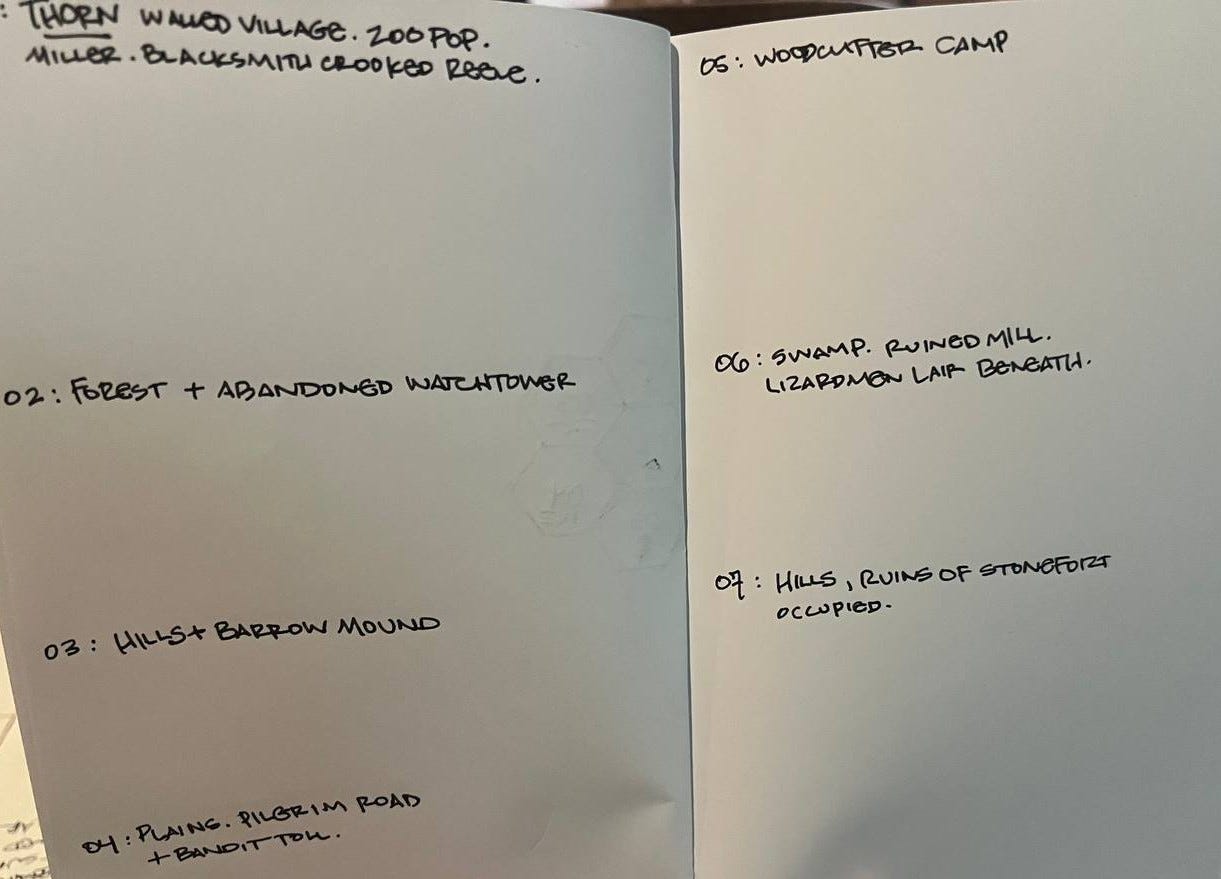
Importantly, these factions and locations are put on cards (or some other type of easily randomized setup - for me the humble index card is the tool of choice.) These are kept in separate stacks, and used in every session to determine what’s going on.
These are not complicated - you can see in the attached picture that they are limited to very basic information…for now.
Ditto for the location entries:
Since I am using an existing ruleset for hexcrawling, coupled with the Outdoor Survival rules for resource management, that loop is taken care of already, so “getting around,” is handled.
What I’m looking for in the first few games is a loop that keeps things moving.
Here’s what I’ve got.
Step 1: Draw x2 Faction Cards. Roll d6:
1-2 Faction takes aggressive action (hostility, expansion, threat, etc.)
3-4 Faction takes neutral action (consolidation, funds/resources, etc.)
5-6 Faction takes diplomatic or positive action (treaty, trade offer, feast, etc.)
This roll can be modified by what you know, but this isn’t always necessary.
Are these two factions already at war? Perhaps a positive roll still makes sense and a ceasefire is offered. Are they allied? Perhaps some internal sabotage or feud has soured the relationship. I generally try to trust the dice to generate interesting ideas and surprise me.
Step 2: Roll Weekly Event + Apply
I have my own table of weekly events that is working for now. Remember, you can always adjust and add to these as you go on and things get broader in the game.
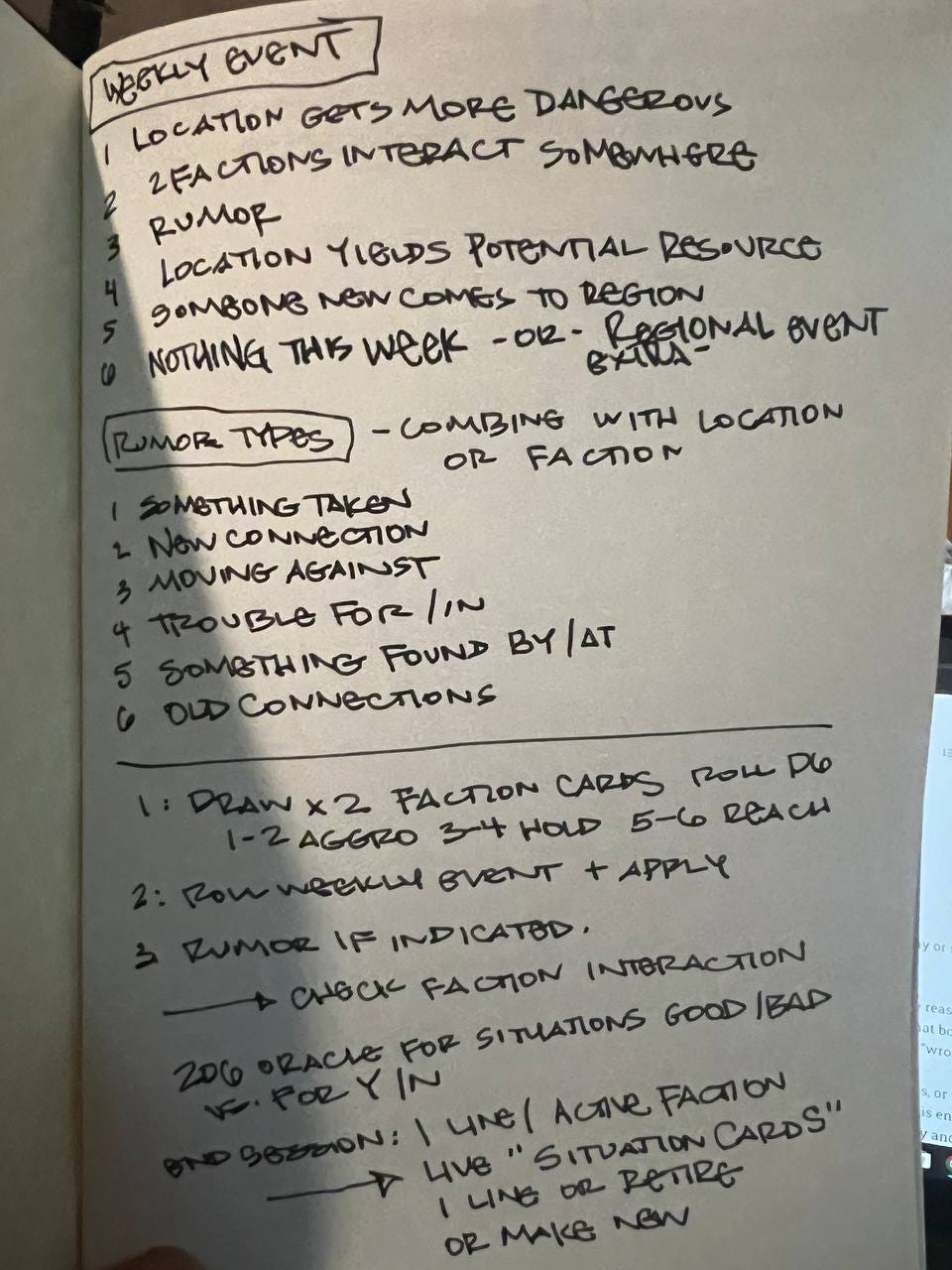
Step 3: Determine Rumor if indicated
If the weekly event indicates a new rumor is spreading in the area, I generate that rumor in a simple way and then consider options until it makes some sense.
When unsure about who or where it involves, I just draw a faction or a location card and apply the rumor. A yes/no oracle can be very useful here.
Following this, I play my session with these things happening in the background. You can also give factions “boxes” to fill in, and determine if they advance their aims each session using a basic die roll and adding modifiers to it based on faction power. For example, let’s say factions need a 6 on the d6 to check a box. Add one to the die roll for every resource they have that they can utilize in the endeavor. Keep these systems simple and keep moving.
Finally, at the end of each session, add one line to the active faction's cards, a new piece of info or truth about them that you learned based on the session. The same can be done for any location interacted with or involved in the play loop.
Use another card to keep track of “active situations,” any of those things that might be a quest now, become a quest, or are important to the world around your party.
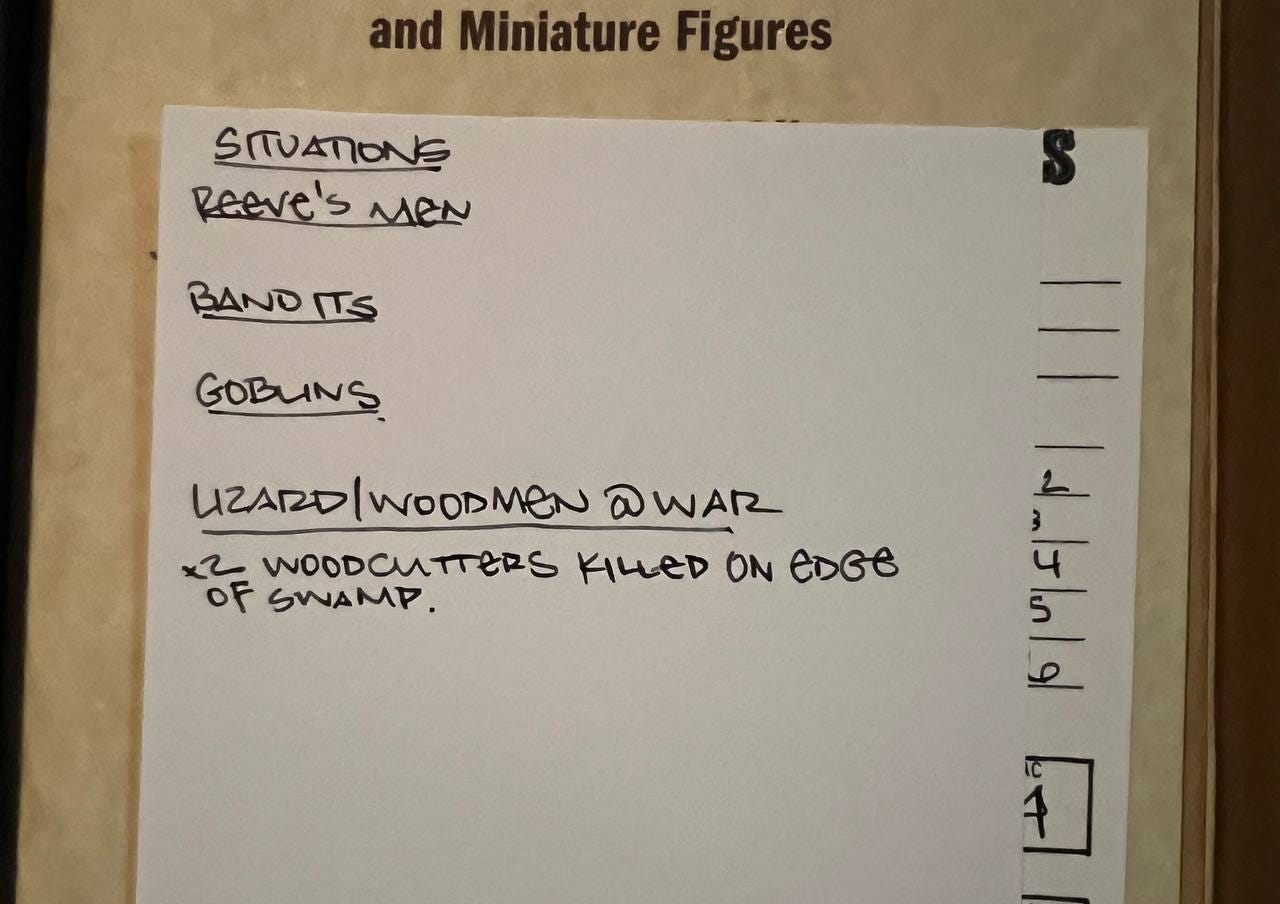
These little facts and details deepen the people and places in the campaign world, and will affect future decisions and narratives.
Example:
I begin the game with my PC entering the village of Thorn.
Using my existing faction cards that I generated and scribbled out before starting, I pull the woodcutters and the lizardmen who live below the abandoned mill. I roll for each, and “aggressive action” is indicated. Trouble between the factions! Making sense of it, I decide that the lizardmen, who are relatively neutral if left alone, killed 2 of the woodcutters who encroached the borders of their hunting grounds. The woodcutters have sent men to Thorn demanding the support of the reeve.
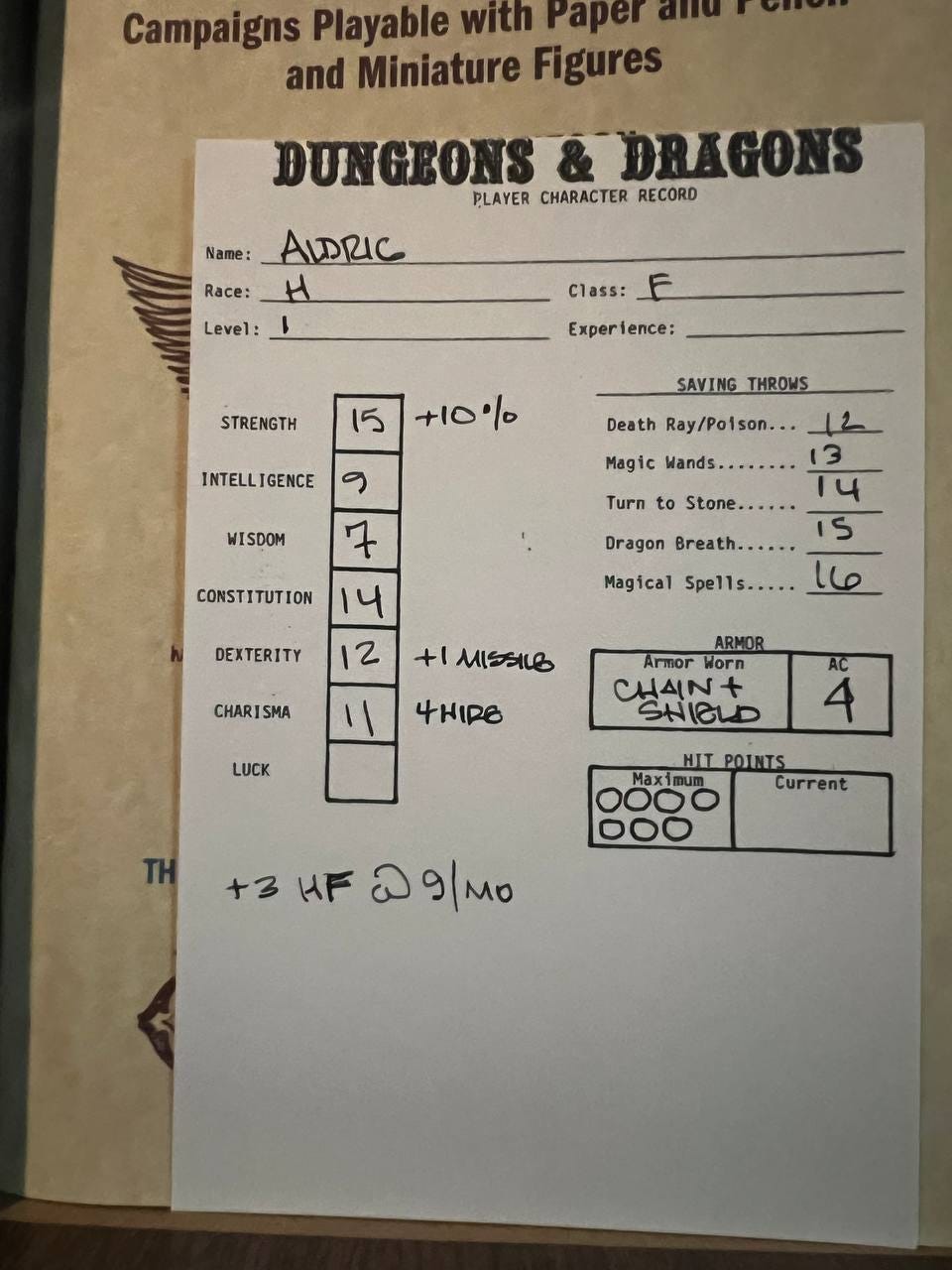
For the weekly event, I roll “location yields positive resource.” Indicated is the barrow hills where the cult makes its territory. A few rolls and I determine the cult is hiring out as mercenaries to make more gold and increase their leverage. I immediately hire 3 heavy footmen from the cult (they seem like swell folks).
At the tavern, I hear a rumor from some other adventurers after spreading a little silver around: the abandoned watchtower north of town used to be used by a hobgoblin and his goblin mercs. They are back, and have been spotted in the woods.
This sounds worth scouting out, plus the reeve is going to need help solving the woodcutter situation, otherwise things are going to get a little heated in Thorn.
All of this is a great setup for a fun second session, and we’ll see where the factions go from here.
I mark all these down as “active situations,” and assign these a number, so I can potentially roll randomly to indicate an ongoing “thread” if I need to.
I plan to add new loop systems on as needed, and I’ll keep you posted how I do it.
I needed this as I *always* drop off a solo run around 3-4 sessions in. Always appreciate what you have to say!
Interesting reading. I feel I need to deep dive later on..